






Discovering a flat tyre just before you are about to leave for work, pick the children up from school, or set off on a weekend getaway is one of the most frustrating experiences a driver can face. For many UK motorists, the immediate panic leads to two urgent questions: “Who can help me quickly?” and “Can this tyre actually be repaired, or am I facing an expensive replacement?”
The good news is that a punctured tyre does not always need to be binned. A professional mobile tyre fitting service can often perform an on-site, road-legal puncture repair safely—saving you valuable time, unnecessary hassle, and substantial money.
However, not every puncture can—or legally should—be fixed. In this comprehensive 2026 guide, we'll explain how UK safety standards determine whether your tyre can be repaired, when a replacement is essential, and how a mobile tyre technician gets you back on the road without you ever having to visit a static garage.
Can a Mobile Tyre Fitter Fix a Puncture?
Yes, absolutely—provided the puncture damage falls strictly within UK automotive safety standards.
Modern mobile tyre fitting vans are fully equipped mobile garages. They carry the exact same commercial-grade bead-breaking tools, pneumatic demounters, wheel balancers, and vulcanising puncture repair materials found in high-end static tyre centres.
The On-Site Multi-Point Safety Inspection
When a technician from Mobile Tyre Champions arrives at your home, office, or roadside location, the tyre is never blindly plugged from the outside. In compliance with strict British Standard BS AU 159, the wheel is removed from your vehicle, the tyre is demounted from the rim, and a thorough multi-point inspection is carried out:
1. Puncture Location
The damage must be situated within the central 60–70% of the tyre tread (the minor repair zone).
2. Penetration Size & Angle
The puncture hole cannot exceed 6mm in diameter and must enter at a perpendicular or near-straight angle.
3. Legal Tread Depth
Tread must be above the UK legal minimum limit of 1.6mm across the central three-quarters of the tyre.
4. Internal Structural Integrity
Checking the inner carcass for rubber powdering, marbling, or crushed cords caused by driving flat.
“Safety always comes first, followed by saving you money. If a tyre can be repaired safely to British Standards, we will repair it. If not, we will recommend a certified replacement.”
When Can You Repair a Tyre? (British Standard BS AU 159)
Not every flat tyre requires a brand-new replacement. Under UK law and the British Tyre Manufacturers' Association (BTMA) guidelines, a professional puncture repair is permissible when all of the following conditions are met:
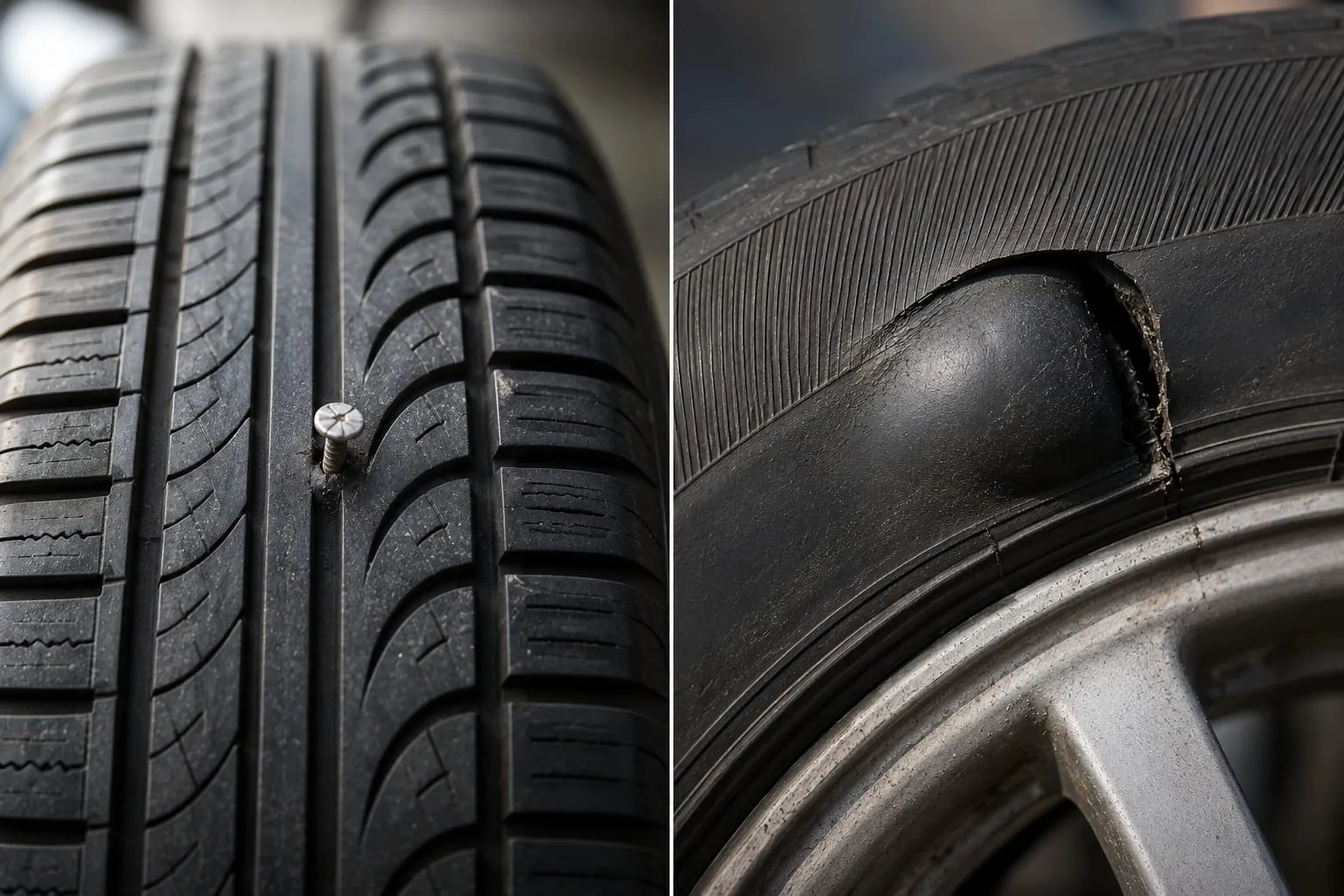
- Central Tread Location: The puncture is located in the central 60% to 70% of the tyre tread (known as the minor repair area).
- Small Entry Hole: The hole caused by a nail, screw, or small debris is 6mm or smaller in diameter.
- No Sidewall Damage: The sidewalls are completely free from bulging, cuts, cracking, or exposed cords.
- Sufficient Tread Remaining: The tyre has at least 1.6mm of legal tread depth remaining throughout (learn more in our guide on when to change car tyres).
- No Secondary Internal Deterioration: The tyre has not been driven upon while deflated, leaving the interior butyl liner and steel belts undamaged.
When all these criteria pass, a technician installs an internal vulcanised combination patch-plug (often called a “mushroom plug”). This permanently seals both the puncture channel and the internal liner, restoring the tyre to its original speed rating and roadworthiness.
| Tyre Condition | Repairable? | Required Action |
|---|---|---|
| Nail/Screw in central tread (≤ 6mm) | Yes (BS AU 159) | Professional on-site combi-plug repair |
| Puncture in sidewall or shoulder | No (Illegal) | Immediate tyre replacement |
| Driven on flat (run-flat damage) | No | Internal cords crushed; must be replaced |
| Tread depth under 1.6mm legal limit | No | Replace tyre to restore legal road safety |
| Multiple punctures close together (<400mm) | No | Structural integrity compromised; replace tyre |
When Should You Replace the Tyre Instead of Repairing?
Sometimes, fitting a brand-new tyre is the only safe and legal path forward. A tyre must be condemned and replaced if any of the following exist:
- Sidewall or Shoulder Damage: Cuts, tears, bulges, or punctures located outside the central tread area.
- Run-Flat Internal Rupture: If the vehicle was driven while deflated, the tyre's internal lining will have disintegrated into black rubber dust and structural ply cords will be broken.
- Large Cuts or Tears: Damage greater than 6mm caused by metal shards, road bolts, or broken glass.
- Exposed Metal Cords: Any visible steel belts or internal ply cords visible through the rubber.
- Ageing or Perished Rubber: Extensive dry rot or sidewall cracking, regardless of remaining tread.
A tyre might appear intact from the outside, but hidden internal structural fractures can cause sudden catastrophic failure at motorway speeds. This is why a certified technician must always remove and inspect the tyre internally before making a recommendation. If you need a replacement, our online tyre finder tool makes it easy to select the right specification for your vehicle.
Why Sidewall Damage Cannot Be Fixed
A common question drivers ask is: “Why can't a technician simply patch a small screw hole or scrape in the sidewall?”
The answer lies in tyre engineering and physics. While the tread area is reinforced with rigid steel belts designed to stay flat against the road, the sidewall is in constant, dynamic flexionwith every single wheel rotation. It supports the vehicle's entire weight, absorbs road shocks, and resists massive lateral forces whenever you steer or brake.
High Risk of High-Speed Blowouts
Any patch applied to a sidewall will quickly weaken and peel off under intense flex and heat. Furthermore, punctures in the sidewall sever the load-bearing vertical cords, creating weak points that can suddenly burst under pressure. For this reason, UK safety standards strictly prohibit sidewall repairs.
Benefits of Selecting Mobile Tyre Puncture Repair
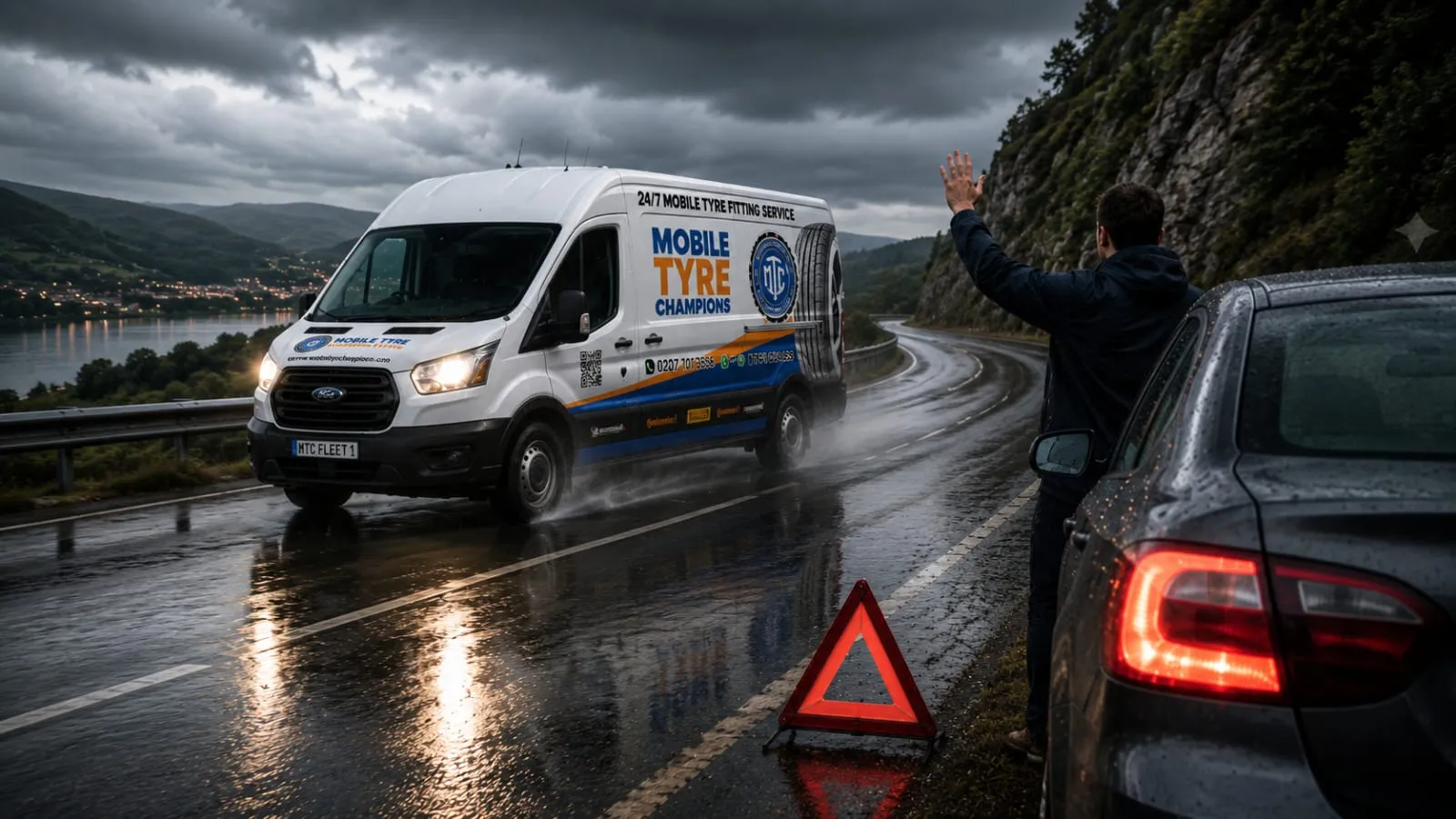
Instead of risking driving on a flat, struggling with dangerous scissor jacks on the roadside, or waiting hours for a breakdown recovery truck, a mobile tyre fitting service brings the complete garage directly to your doorstep.
Ultimate Convenience
Whether you're parked in your driveway at home, in the office car park, or stranded safely on a roadside verge, our technicians arrive equipped to handle the job on the spot.
Huge Time Savings
No waiting in queue at static tyre shops, no taking time off work, and no losing your weekend. Carry on with your daily routine while we complete the repair outside.
Specialised On-Board Equipment
Our custom vans carry electronic wheel balancers, heavy-duty jacks, high-capacity compressors, and locking wheel nut removal tools.
Honest, Transparent Advice
We believe in straightforward, honest customer care. We never push unnecessary tyre replacements if your puncture can be safely and economically repaired to BS AU 159 standards.
How Long Does It Take to Repair a Mobile Tyre?
A professional on-site puncture repair takes between 20 and 40 minutes from arrival to completion.
This duration includes safe jacking of the vehicle, wheel removal, tyre demounting, puncture preparation and internal vulcanisation, remounting, precision wheel balancing, refitting to the hub, and torquing wheel bolts to exact vehicle manufacturer specifications.
If the inspection reveals that the tyre cannot be safely repaired and requires a fresh replacement, our technician can fit and balance a brand-new tyre in around 30 to 45 minutes. For a deeper breakdown of appointment timings, read our guide on how long mobile tyre fitting takes.
Can You Drive With a Flat Tyre?
Never drive on a flat or significantly deflated tyre.
Even driving a few hundred yards to reach a petrol station can have devastating consequences:
- Destroys Repairability: The heavy weight of the vehicle pinches the deflated tyre between the rim and the tarmac, shredding the internal cords and turning an inexpensive £30–£40 puncture repair into a compulsory £100+ tyre replacement.
- Bends and Cracks Alloy Wheels: Without a cushion of compressed air, potholes and road bumps hit your alloy wheel rims directly, causing expensive warping or structural cracks.
- Severely Degrades Braking & Handling: A deflated tyre pulls hard to one side, increases stopping distances dramatically, and creates an extreme risk of spinning out.
- Risk of Complete Blowout: Friction creates intense heat in deflated tyres, leading to sudden tread delamination and total tyre failure.
If you suspect you have a puncture, pull over safely as soon as it is safe to do so, turn on your hazard lights, and contact an emergency mobile technician. Check our advice on what to do when you get a flat tyre for roadside safety procedures.
Warning Signs You Have a Slow Puncture or Flat Tyre
Not all punctures cause an immediate blowout. Slow punctures can lose air gradually over several days or weeks. Keep an eye out for these telltale red flags:
- Persistent Pressure Drops: Having to top up air in one specific tyre every week.
- TPMS Dashboard Warning Light: An illuminated yellow horseshoe icon with an exclamation mark.
- Vehicle Pulling to One Side: The car constantly drifting left or right on straight roads.
- Vibration or Clicking Sound: A rhythmic ticking or rattling noise that increases with road speed (usually a screw or stone lodged in the tread).
- Spongy or Sluggish Steering: The car feels heavy or unresponsive when cornering.
The sooner a slow puncture is inspected, the higher the chance it can be repaired safely before internal structural damage takes place!
Why Choose Mobile Tyre Champions?
Tyre troubles never happen at a convenient time. That's why at Mobile Tyre Champions, we provide round-the-clock mobile puncture repair and fitting services across our primary service regions:
What makes our service the #1 choice for UK drivers:
- Rapid Response Time: Emergency technicians dispatched swiftly to minimize your downtime.
- Premium & Budget Brand Range: We stock tyres from Michelin, Continental, Pirelli, Goodyear, Dunlop, and dependable budget options.
- BS AU 159 Compliant Repairs: Every puncture repair is executed with internal combi-plug vulcanisation for maximum safety.
- Specialist Services: From commercial van tyres and 4x4s to locking wheel nut removals and tyre pressure sensor diagnostics.
- Eco-Friendly Disposal: Worn or unrepairable tyres are recycled responsibly through licensed tyre recycling facilities.
Frequently Asked Questions
Can a mobile tyre fitter repair a puncture at my house or work?
Yes! Mobile mechanics carry self-contained workshops inside their vans. As long as there is safe, level ground to park and work on your car, punctures can be inspected, repaired, and re-balanced at your home, workplace, or roadside.
Are all punctures repairable with sealant or temporary plugs?
No. DIY tyre foam sealants and external rope plugs are strictly temporary emergency stop-gaps to help you move away from danger. Under British Standards (BS AU 159), a permanent repair requires the tyre to be removed from the wheel rim, inspected inside, and sealed with a vulcanised patch-plug from the inside out.
Which is cheaper: fixing a puncture or buying a new tyre?
Fixing a puncture is considerably cheaper. A professional mobile puncture repair costs a fraction of the price of a replacement premium tyre, making it the most economical choice whenever safety parameters allow.
How do you know if a tyre needs repair or replacement?
Only a professional internal inspection can definitively verify whether a tyre is safe to repair. If the puncture is in the central tread and the internal carcass has no run-flat damage, it can usually be repaired. If the sidewall is damaged, tread is under 1.6mm, or the tyre was driven on flat, it must be replaced.
Can run-flat tyres with punctures be repaired?
Most run-flat tyre manufacturers (including Bridgestone, Continental, and Pirelli) recommend replacing run-flat tyres after a puncture because the reinforced sidewall masks internal thermal breakdown that occurs while driving deflated. Our technicians can inspect your run-flat tyres and advise on the safest option.
Conclusion: Keep Moving Safely
Discovering a flat tyre doesn't automatically mean you must purchase a costly replacement. In many cases, an experienced mobile tyre technician can safely repair the puncture on-site, saving you both time and money.
The key is to act promptly and never drive on a flat tyre. Doing so destroys the tyre's internal carcass and turns a simple repair into an unavoidable replacement.
If you have a flat tyre or suspect a slow puncture, book an on-site inspection today with Mobile Tyre Champions. Use our online tyre finder, head directly to our booking system, or contact our friendly support team for rapid, 24/7 mobile assistance across the UK.